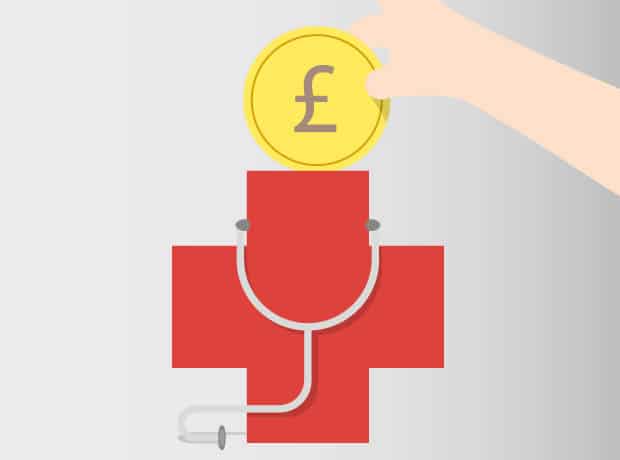
This week the NHS announced that it was going to be giving a greater number of patients their own budgets to source healthcare services. Building on the 23,000 people across the UK who already collect personal finances through the NHS’s Continuing Healthcare initiative, it’s reported that now as many as 350,000 Britons will receive such funding.
According to ministers, the money will be paid directly to patients requiring out-of-hospital care and it can be spent on whatever they think best helps to manage their condition, as long as a doctor agrees. The development comes as part of the Government’s broader focus on putting greater onus on individuals to better manage their own health; however, the news has been met with a mixed reception.
On the one hand, there are fears that the money will be ineffectively spent and, in the long run, do little to keep patients out of hospitals. On the other hand it represents a move to develop stronger links between consumers and healthcare providers within their community, thereby boosting the delivery of domiciliary care and lessening the burden on the NHS.
Lessening the strain on NHS hospitals
At very least, the NHS’s announcement demonstrates a more creative approach to tackling the problems the public health service is currently facing. Indeed, NHS Providers recently warned that the number of people waiting more than the targeted four hours in A&E could reach 3.6 million next year. Furthermore, the membership organisation NHS trusts stated that as many as 560,000 people will wait more than 18 weeks for routine care by March 2019; that represents a rise of 80,000 patients.
Clearly, finding means of alleviating the demand for hospital beds and lessening the strain on A&E departments is an absolute must. And to this end, discovering ways for individuals – particularly those with pre-existing medical issues – to take better care of themselves in the home is vital.
As such, the NHS’s introduction of personal health budgets is a positive step for potentially lowering the number of people across the UK who require acute care. But it has to be carefully managed.
Making sure patients spend wisely
The challenge for the NHS is, of course, to ensure the money it hands over to patients for them to manage their own health and care requirements is spent effectively.
This is not simply an issue of guaranteeing that people don’t take the money and spend it on non-health-related products, such as holidays or consumer products; but rather, the NHS must make sure its patients spend the right amount of money on the right services from the right providers.
If this is to be achieved, further action will be required. Most notably, patients will require support and education so they are able to source, book and pay for the services they need – something that can currently be a stressful, difficult task.
In early 2018, WeMa Life commissioned an independent survey among more than 2,000 UK adults, uncovering the troubles faced by those who have had to arrange private health and care services for a loved one. Of the many interesting findings to emerge from the study, two stand out as particularly pertinent in light of this week’s news: the first is that 77 percent of informal carers think the government needs to do more to help people in the provision of care services through greater financial support or education; the second is that 46 percent of people who act as carers for others say it’s difficult to find, book and transact for the services they need.
Positively, financial support is now being committed, although only time will tell if the finances offered are enough. However, now the focus must be on making it easier for people to access the health, care and wellbeing services they need.
Connecting patients and service providers
Whether it’s a nurse, physiotherapist or nutritionist, patients across the UK – as well as their families and friends – must be able to easily locate and arrange for the delivery of essential services.
Technology can play a vital role in this next step by better connecting patients and service providers. Beyond providing marketplaces and forums for people to find the right suppliers, digital solutions can also improve communication, enhance the ability to track booked services, and streamline the payment process.
It’s important that the NHS recognises the need for wider support for patients who are given their own personal health budgets; doing so will ensure precious financial resources are spent effectively and, ultimately, make sure that people across the UK can still access high quality care services.
Rohit Patni is CEO and co-founder of WeMa Life