Every facility depends on it for essential processes, making compressor performance a deciding factor in both operating costs and product integrity. Modern technology now meets both demands, delivering pure air while consuming far less energy.
The High Cost of Contamination-Free Air
Compressed air is widely recognised as the fourth utility in manufacturing. As it plays a direct role in pharmaceutical production, particularly in tablet coating, fermentation and packaging, any trace of oil contamination can compromise patient safety and trigger regulatory action.
Purity carries a steep cost. Electricity typically represents over 80% of a compressor’s total life cycle cost. These expenses accumulate quickly for operations running an oil-free air compressor for pharmaceuticals 24/7, straining both margins and sustainability targets.
Guide to an Efficient Pharmaceutical Air Compressor
Variable speed drive (VSD) technology can reduce energy consumption by as much as 50%, making it one of the most impactful upgrades available. A VSD compressor adjusts motor speed to match real-time demand, eliminating waste from fixed-speed units running at full capacity during low-demand periods.
System design is just as important. Properly sized piping, adequate storage and pressure regulation prevent drops that force compressors to work harder. Meeting the ISO 8573-1 Class 0 air compressor specification delivers dual benefits. It certifies the air is free of oil vapours while eliminating downstream filtration, reducing pressure drops across the network.
Three Companies Engineering a More Efficient Future
Three providers stand out for their track record in pharmaceuticals, certified oil-free technology and after-sales support designed to minimise production downtime.
1. Quincy Compressor
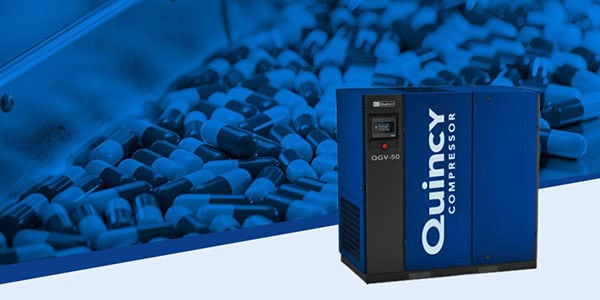
Quincy Compressor is known for its reliability and premium performance in demanding environments. Its systems lower the total cost of ownership through durable engineering. Quincy also offers oil-free compressor products designed for purity-critical applications.
Key Features:
- Industry-leading warranty: Its extensive warranty plans on key components give customers long-term confidence in their equipment.
- 24/7 expert support: A global network of professional and knowledgeable air experts delivers responsive service and reduces downtime.
- High efficiency: Its compressors are built to deliver a consistent supply of pure compressed air.
2. Atlas Copco
Atlas Copco is a global leader in energy-efficient compressed air for sensitive industries, including pharmaceutical manufacturing.
Key Features:
- Guaranteed oil-free air: It holds an ISO 8573-1 Class 0 certification from TÜV Rheinland.
- Advanced VSD+ technology: Its proprietary VSD compressors cut energy use by up to 50% compared to fixed-speed models.
- Smart monitoring: Its Elektronikon controller enables real-time performance tracking and predictive maintenance.
3. Ingersoll Rand
Ingersoll Rand delivers a diverse portfolio of oil-free compressors engineered to meet global quality standards.
Key Features:
- Comprehensive oil-free portfolio: Its rotary screw, centrifugal and scroll technologies enable facilities to match solutions to specific plant demands.
- System reliability: Durable components and simplified designs reduce maintenance needs while sustaining long-term reliability.
- Compliance assurance: Its systems are designed to meet FDA and GMP frameworks for pharmaceutical production.
Frequently Asked Questions About Pharmaceutical Compressors
Here are the answers to FAQs on using compressed air in the pharmaceutical sector.
Why is Class 0 air important?
Class 0 is the highest purity standard under ISO 8573-1, certifying that compressed air is free of oil aerosols and vapours. This classification prevents product contamination and protects patient safety.
How does a VSD compressor help save energy?
A VSD compressor adjusts the motor speed in real time to match actual demand. This stops fixed-speed compressors from wasting energy when demand is low.
Is it possible to use an oil-injected compressor with filters instead?
Oil-injected compressors with downstream filtration can produce high-quality air, but if the filter fails, contamination risk increases. Oil-free compressors eliminate that risk at the source and prevent filters from wasting energy.
Innovating Beyond Using Energy
Pharmaceutical companies stand to gain significantly from upgrading their compressed air systems, far beyond simply reducing energy costs. Improved product quality, decreased contamination risk and smoother operations are all clear benefits. Manufacturers who invest in high-purity systems now will have a distinct advantage as regulations tighten and costs continue to rise.