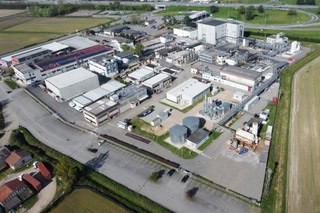
The new three-storey building is being constructed as part of Axplora’s $60m highly potent active pharmaceutical ingredient (HPAPI) investment programme, with the designs focused around accelerating development, expanding execution capacity and delivering cost-efficient, high-potency manufacturing at scale.
The building will house R&D, quality control and microbiology laboratories, along with integrated support areas, all of which will be directly connected to existing manufacturing operations.
Axplora aims to eliminate multi-site delays and enhance efficiency by co-locating development, analytics and large-scale HPAPI production within a single site.
This new construction project is the most recent expansion across the Axplora network, with a multi-million-euro lyophilisation expansion in Le Mans, France being announced in February.
Martin Meeson, CEO of Axplora, said: “As pharma pipelines consist of molecules of higher potency and additional complexity, customers are looking to avoid delays through fragmented supply chains.
“By expanding R&D, analytical and quality capabilities alongside large-scale HPAPI production, we are shortening development cycles and helping them control cost while accelerating time to market.”
With over 1,000 highly potent small molecules in development, HPAPI molecules make up over 30% of the global drug development pipeline.
With five independent manufacturing lines and 105sqm of installed capacity, Farmabios operates one of Europe’s largest HPAPI manufacturing facilities. The facility, which is built to an OEB 5 containment strategy, is currently fully operational, with the first projects underway.
Mario Di Giacomo, MD of Farmabios, said: “This new R&D hub strengthens our ability to deliver integrated, end-to-end programmes within a single site.
“By reducing complexity and avoiding unnecessary transfers, we improve both timeline predictability and overall programme costs.”
Construction is currently taking place, with February 2027 set as the target date for completion.